

Cities cannot achieve climate neutrality without active participation and action from citizens, the private sector and civil society. It is encouraging that there is commitment to active citizen and stakeholder engagement embedded in the strategic climate transition plans of many EU Mission cities. However, some cities still struggle to transfer citizen engagement from lofty commitments on paper to effective practice on the ground. Badly run citizen engagement can do more harm than good in terms of trust and ownership, so overcoming this implementation gap is vital.
Over the past two years, NetZeroCities has supported the City of Helsingborg with specialist advice to develop how the city works with its residents and other stakeholders in the climate transition. In 2024, the politicians on Helsingborg’s Environment Committee prioritized a series of 25 climate dialogues to bring the views of the residents of Helsingborg into the heart of the climate agenda.
NetZeroCities worked with Helsingborg on four workshops over the course of 2024 and 2025: two internal workshops and two external events (at Helsingborg’s Innovation Summit and the closing event of the climate dialogue process).
Helsingborg is a city which already has a track record when it comes to innovation, and the support from NetZeroCities workshops helped the city to deepen the conversations around how to involve residents in the city’s climate and innovation work in a more systematic, meaningful and strategic way.
Here are four transferrable lessons that emerged from the workshops:
1. Don’t just limit yourselves to talking about climate change
The climate transition is often discussed separately from other important issues. Many of the residents who actively choose to attend climate dialogues are already very engaged in the topic and have already taken steps to significantly reduce their own emissions.
Conversely, residents with high emissions are often not very motivated to engage in a process which mainly focuses on the topic of climate change. However, they may be very interested in attending a dialogue around topics such as affordability of energy, safety or health. Climate change and mitigation touches on almost all aspects of city life and we should make the most of this to increase the reach of our citizen engagement by broadening the scope of our events.
A useful question to ask at the start of the engagement process is ‘what’s at stake for our stakeholders?’. What is important enough for our target groups that it would motivate them to give up their precious time? The answer to the question helps cities reframe a climate dialogue to touch on key issues which motivate a much wider range of people to take part. In their climate dialogue, Helsingborg actively sought to hold conversations where the main focus included not only the climate but other related issues as well. Cities already organise many events and gatherings on a diverse range of topics where climate may be raised as a complementing topic.
2. Meet people where they are
There is not one correct way of reaching citizens. A city which is genuinely committed to engaging in an inclusive way needs to use many different channels (both physical/digital). This is not necessarily about creating new events or forums, but making better use of what already exists.
For citizens, it can be a confusing experience trying to get involved; cities could do more to simplify the process of finding relevant data, support and opportunities to get involved. Engagement often uses the jargon of the municipality and takes place in service specific siloes. Making engagement relevant to citizens in terms of language, theme and scope will be crucial to broaden the range of people engaged. Cities are also often not well-equipped to respond to citizen-initiated activities.
Working in varied ways allows for synergies to develop between different forms of engagement. It also allows for an ‘empowerment journey’ for citizens, whose skills and confidence can be built over time. Engagement needs to have a long-term focus, happen year-round and include a mix of formal and informal engagement.
In their climate dialogues, Helsingborg actively worked to meet people outside of formal meeting spaces; for example, by organising climate walks in neighbourhoods, digital surveys, speculative design events and exhibitions in public spaces.
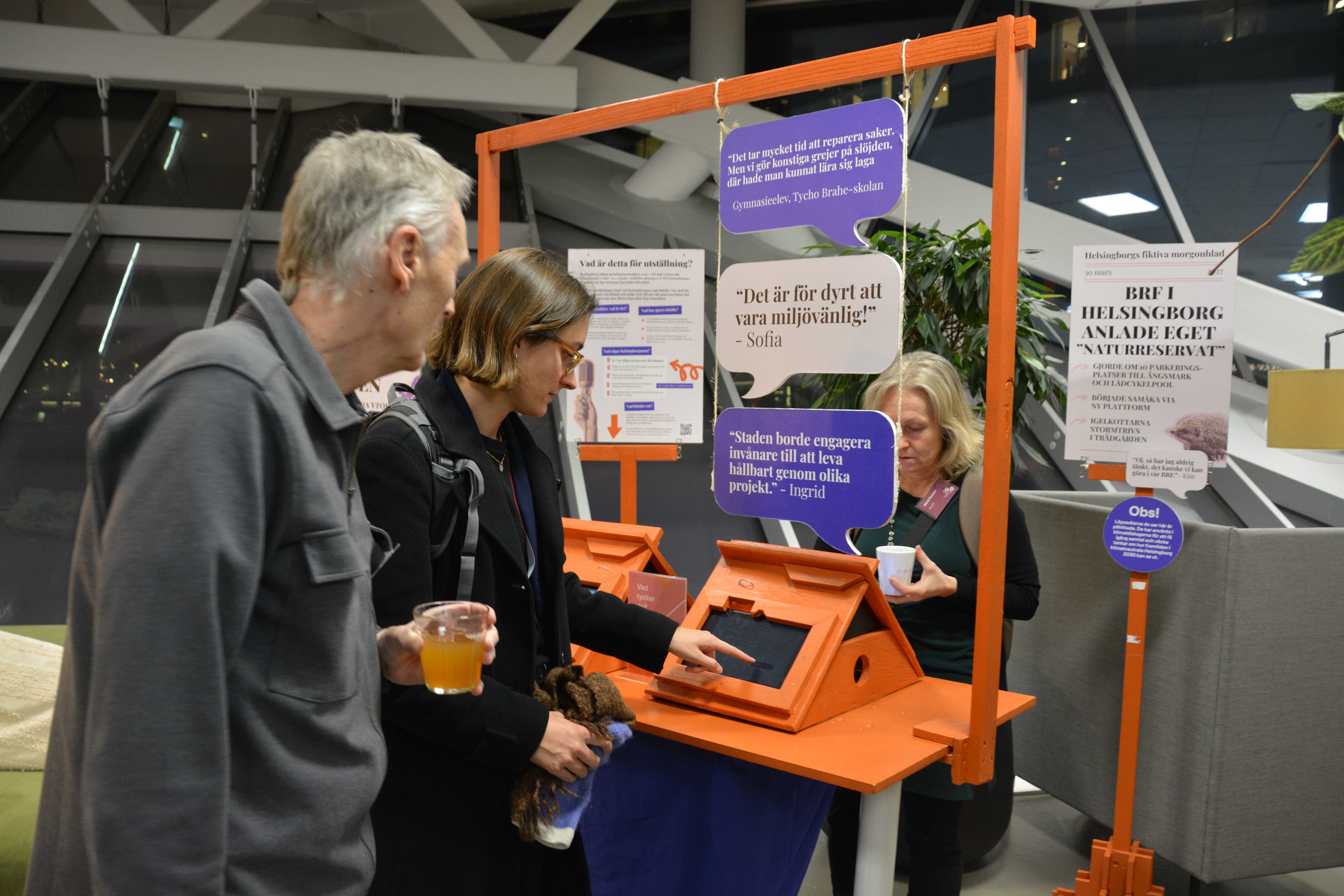 The mobile exhibition of the Climate Dialogues
3. Work across departmental boundaries.
Climate change is an issue which cuts across traditional municipal boundaries and divisions. In the past, city governments have tended to work in service specific siloes. This can be effective in certain situations, but definitely not where an issue is crosscutting, unpredictable and lies outside the scope of any one part of the municipal bureaucracy – such as climate change. In Helsingborg, it became clear that a successful climate transition required the active involvement of the rest of the city departments and municipal companies. The city’s transition team has a key role in working across the city administration as a whole to build bridges and coordinate working.
4. Know when to lead and when to step back
A core challenge for Mission Cities is that most of the emission reductions are outside the direct control of the municipality. As such, the city cannot achieve the net zero targets on its own. Rather than a controlling role, the city needs to embrace the role of the motivator and enabler of the actions of others. Citizen and stakeholder involvement is one of the most important ways that cities can raise awareness and motivate action in the climate transition
City departments which are more accessible to outside actors require skills relating to listening and introspection. Cities should recruit or upskill staff in areas such as inclusivity, workshop facilitation, and participatory design methods. The climate transition is as much about changing culture as it is about physically changing the city landscape.
Helsingborg and many other Mission Cities are exploring how to empower others to act independently. Sometimes the city needs to be in the driving seat and other times the role of supporting and encouraging is needed. In Helsingborg, both approaches are evident ; for example the city has set up an official pledge where local companies and associations can commit to supporting the climate transition ('Helsingborgs klimatavtal') and there is also a grassroots pledge for individuals led by an independent association ('Helsingborgarnas klimatavtal'). These different approaches complement and strengthen each other.
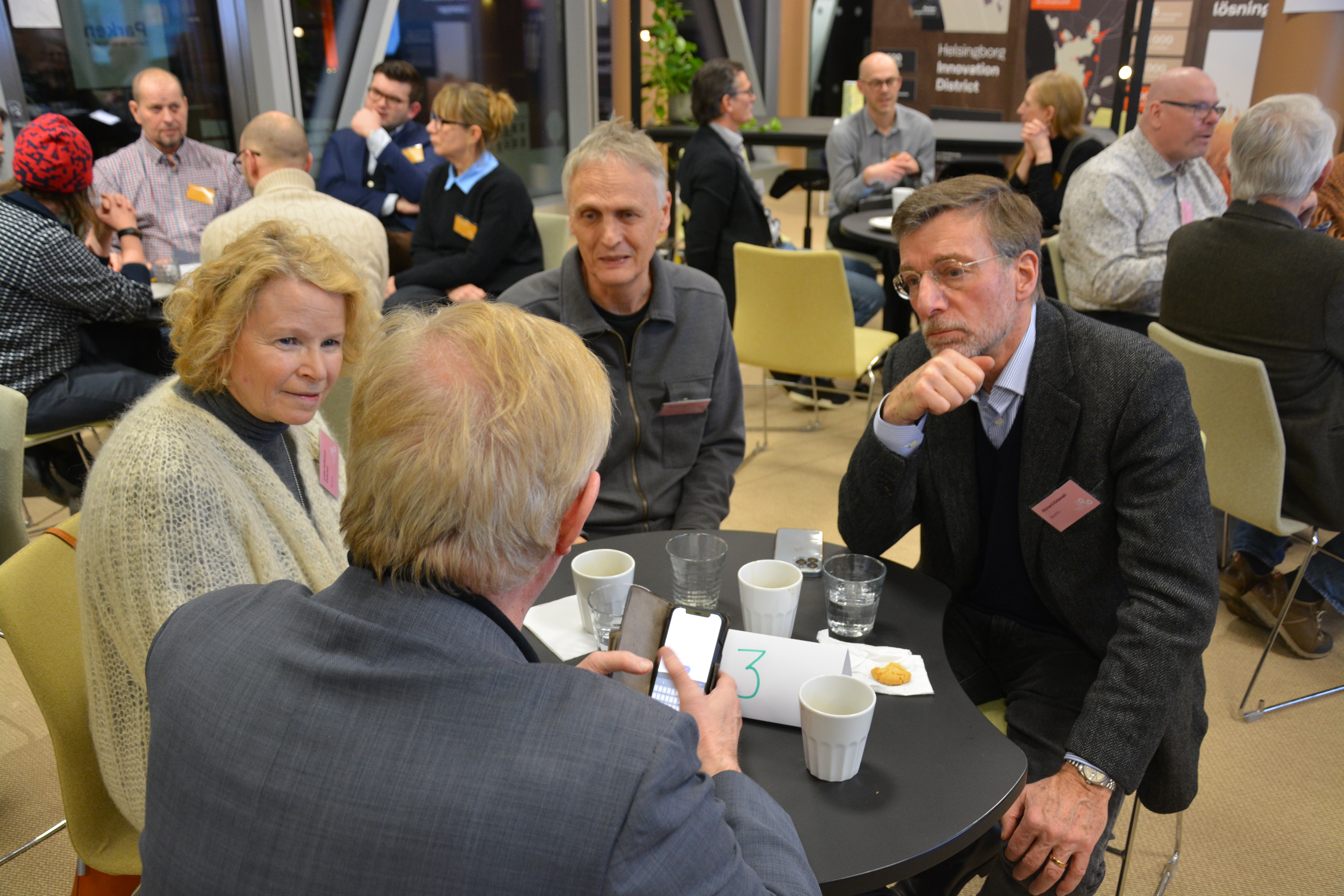
The closing event of the climate dialogues
Closing thoughts
Over the course of almost two years, NetZeroCities has worked with the City of Helsingborg on a climate engagement learning journey. The results are promising – citizen engagement is a vital component in the overall transition toolbox, but we can also see that many cities need to learn from best practices in Helsingborg and other innovative mission cities. Many cities need to re-think their roles and ways of working in order to make the most of citizen and stakeholder engagement.
Following the 25 climate dialogues, the Environment Committee in Helsingborg decided to create a strategic framework for citizen engagement in the climate transition. This was not done in isolation, but as part of a wider collaboration with the Democracy and inclusion team within City Hall. By working cross-sectorally the framework will draw on best practices from across the whole city, regardless of if it is a dialogue process in health, leisure, built environment or climate change.
As a city, Helsingborg has embraced innovation and openness to new ways of working as a key part of their municipal identity. Within this framework, citizen engagement is a vital component allowing the city to tap into the wisdom which exists in the wider system.