

Recife: Climate-Responsive Upgrading in Comunidade do Pilar
Women-led action greening public space, strengthening housing resilience and advancing circularity
Status
City description
Recife is the capital of Pernambuco, a coastal metropolis of 1.5 million people marked by extreme heat, informal labour markets and deep socio-spatial inequalities. Comunidade do Pilar, located in the historic centre and designated as a Special Zone of Social Interest (ZEIS), remains physically segregated with limited services, scarce green areas and unsafe public spaces. Home to approximately 1,200 residents across 350 families, three-quarters of whom rely on informal employment, the community faces persistent vulnerability. Only 192 of the planned 588 social housing units have been completed, leaving many households in heat-exposed, precarious shacks and reinforcing structural risks.
Challenge
Pilar faces combined housing precarity, extreme heat, poor waste management, and decades of interrupted upgrading works, fuelling mistrust and limiting climate awareness.
Solution
The Urban Lab anchors climate action in community priorities through participatory design, women’s leadership, low-carbon public space improvements, sustainable housing guidance, and capacity-building. Quick, visible prototypes build trust while enabling longer-term structural change.
Key Impacts
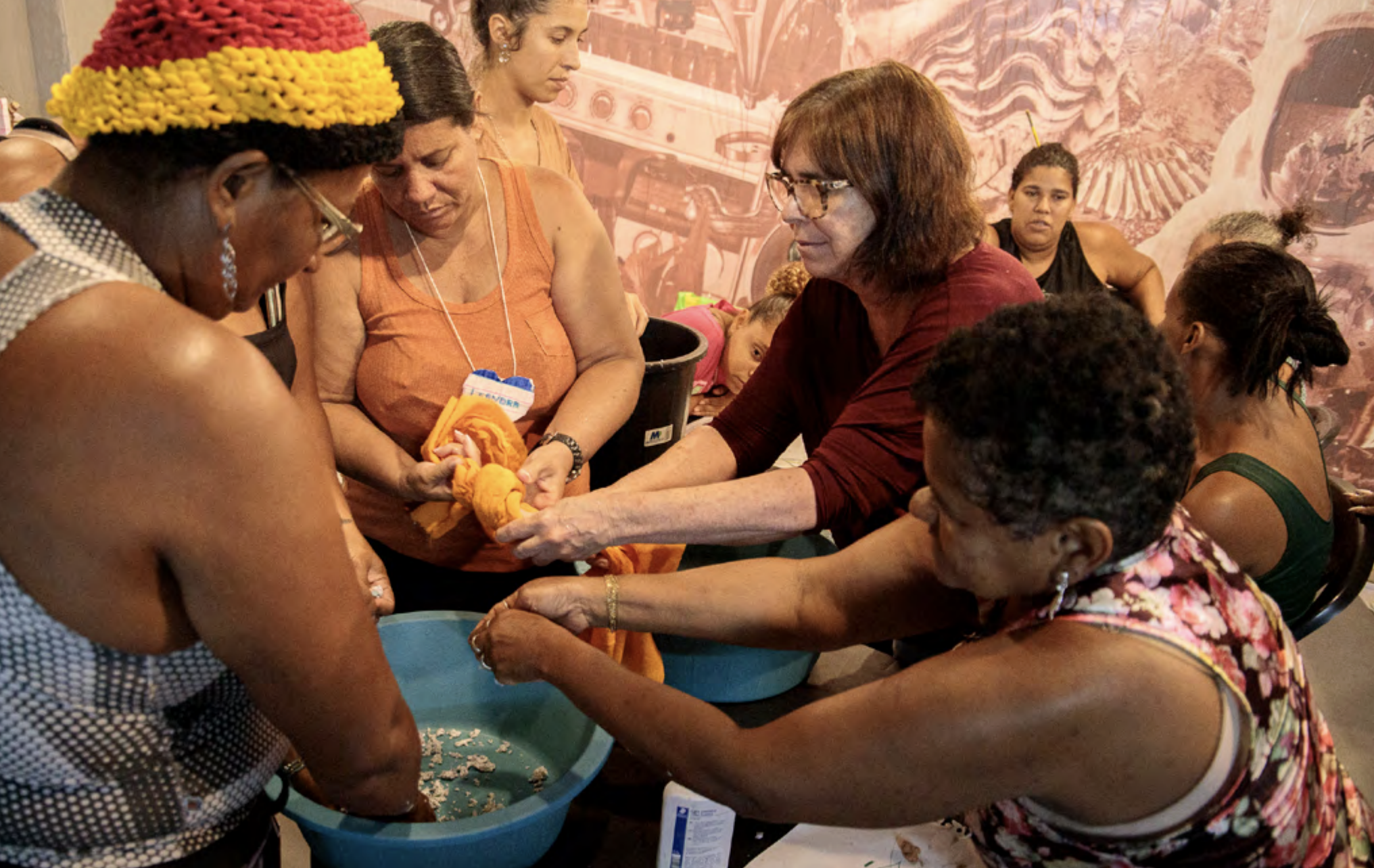
24 women trained in circular economy crafts
(Artesãs do Pilar), generating income and reusing waste.
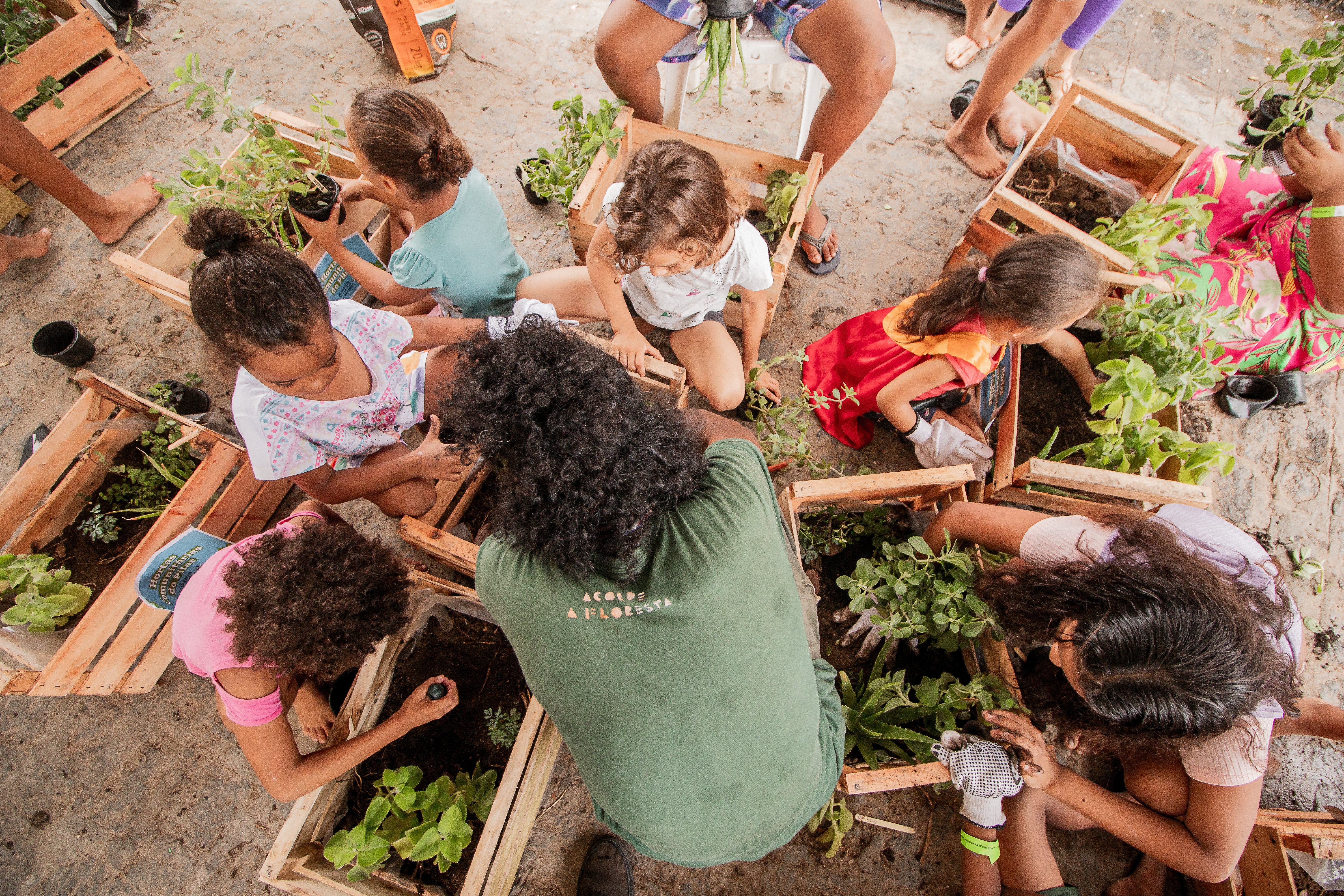
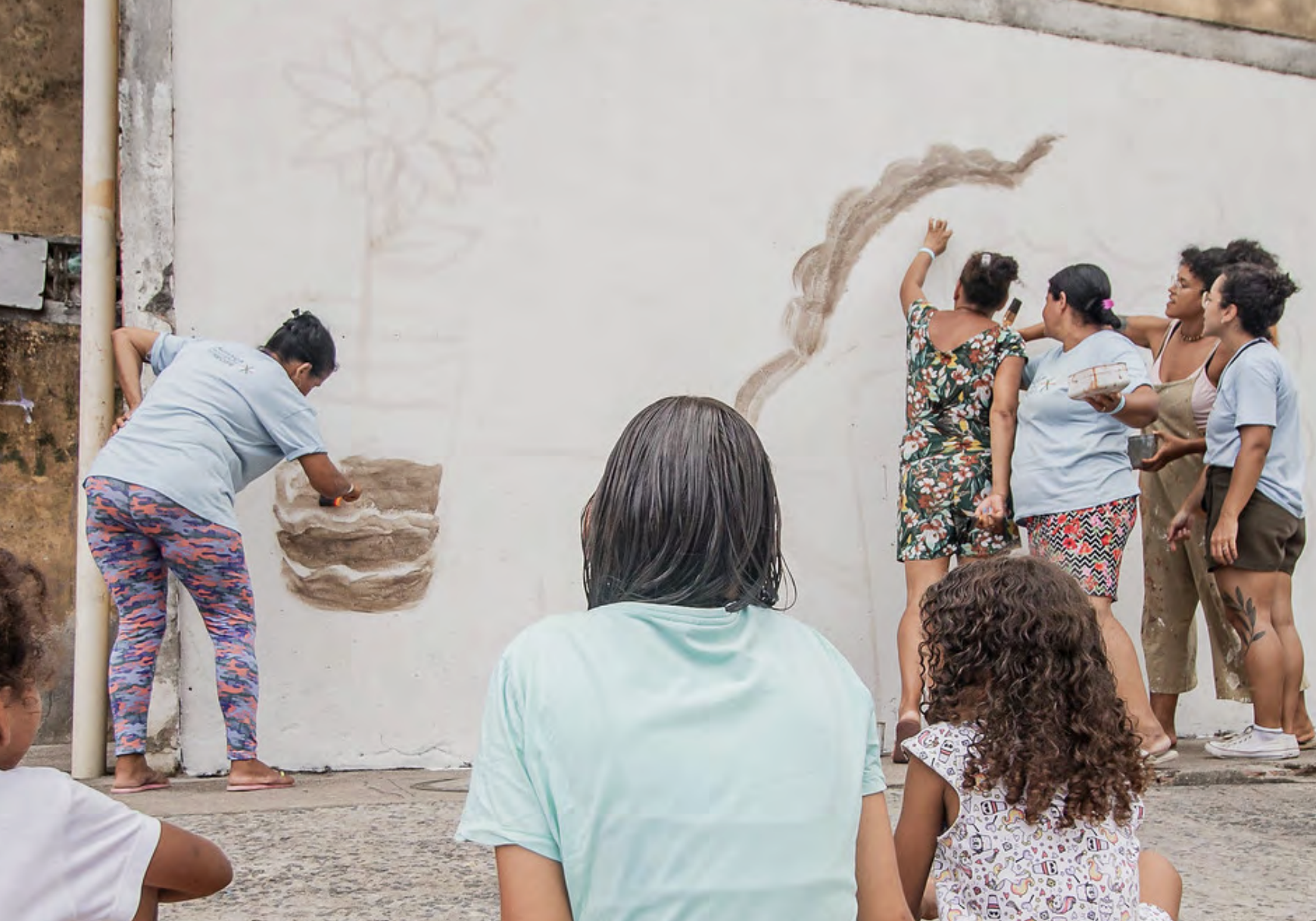
2 mutirões implemented for requalifying a public space
for the community use, engaging dozens of residents, especially women and children.
4 working groups
created to accelerate action and supported by a communication team.
16 Urban Lab meetings
with 85% women representation among active community members.
1 community-led census produced
generating data for public decision-making and housing advocacy.
Comments ()