

Greening Villa 20: Community-led Climate Upgrading in Buenos Aires
Nature Based solutions cool, green, and reconnect the neighborhood with the city
Status
City description
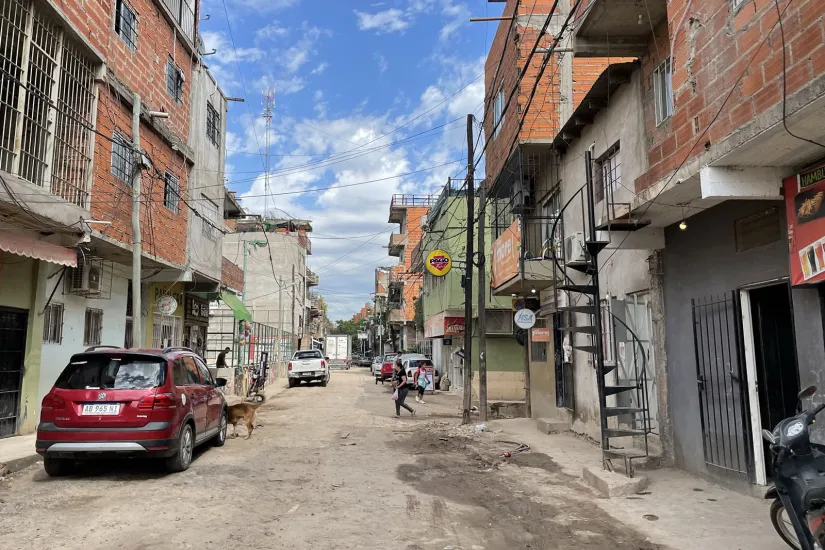
Buenos Aires, Argentina’s capital, covers approximately 203 km² and has over 3 million inhabitants. The southern districts, including Commune 8 where Villa 20 is located, face higher levels of social and environmental vulnerability than other parts of the city. Villa 20 itself spans 48 hectares (0.48 km²) and is home to almost 28,000 people living in just over 4,500 housing units.
Challenge
Villa 20 suffers from high temperatures, flood-prone streets, scarce vegetation, and degraded open spaces. These environmental pressures intersect with poverty, dense housing, and weak infrastructure, worsening social vulnerability and limiting opportunities for healthier, greener urban life.
Solution
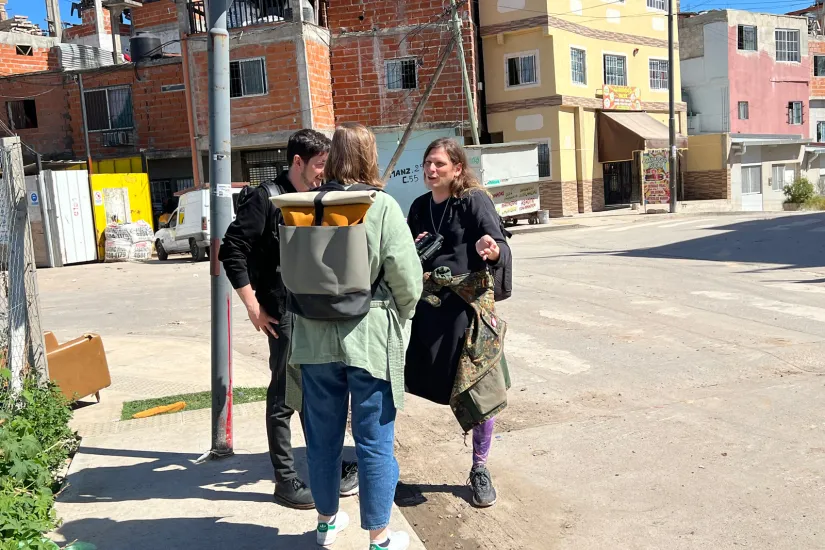
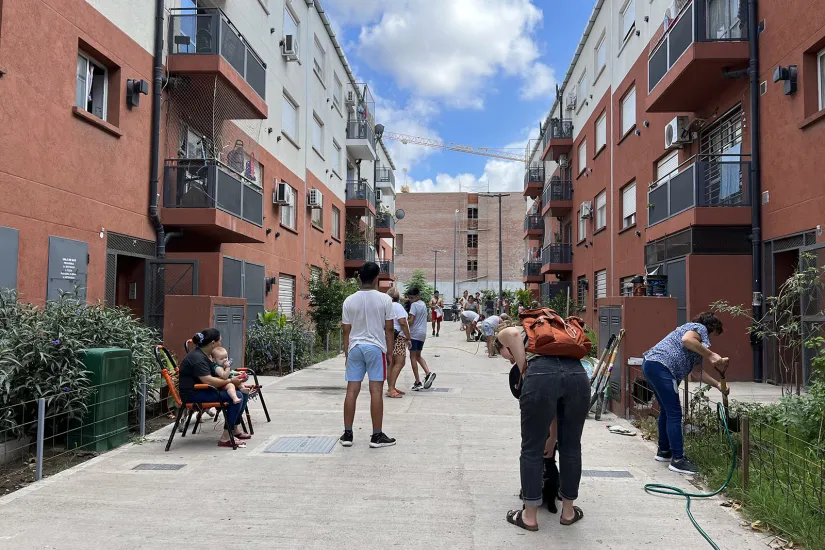
The Villa 20 Urban Lab transforms this context into a catalyst for innovation. It embeds climate action within the upgrading program, using co-design, education, and pilot projects to integrate nature into daily routines. By greening courtyards, schools, and streets, improving microclimates, and generating local data, the initiative empowers residents to lead the transition toward a cooler, more resilient, and more dignified neighborhood.
Key Impacts
28 Urban Lab general meetings held
with an average of 18 participants, maintaining multi-actor governance in Villa 20
2 major NbS sites completed
and interventions in alleys (rain gardens, planters, pergolas)
107 new planted areas
with native species enhancing shade and biodiversity
1 Environmental Circuit
connecting climate action interventions and schools
9 climate sensors installed
for monitoring local temperature and humidity
3 Murals referring to community life
engagement and environmental sustainability
1 Manual for climate adaptation in popular neighborhoods
for self-builders and community members
3 short films
dedicated to create awareness
1 perception survey
carried out by trained women of Villa 20
Comments ()